

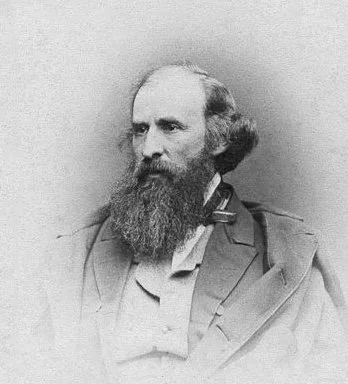
Image Source: WIKIPEDIAHENRY KIRKE BROWN
1814-1886
Creator of the first western bronze, Henry Kirke Brown achieved that distinction with his work, The Choosing of the Arrow.
Brown was fascinated with American history, especially American Indians, and was committed to American artists dedicating themselves to American and not the Europeans subjects so prevalent among the many Americans with Old World classical training.
HENRY KIRKE BROWN BIOGRAPHY
-
Brown was born in Leyden, Massachusetts, and showing early art talent for portraiture, went to Boston at age 18 to study with Chester Harding, who was a leading portraitist of that time. In Harding's studio, Brown found some clay, which he modeled and decided he was more fascinated with that medium than oil paint.
To earn money to go to Italy, the place of training in those days for any one aspiring to be a serious sculptor, Brown worked as a Civil Engineer on Illinois' first railroad. He failed to earn sufficient money, but wealthy friends, impressed by his determination, paid his passage, and he stayed five years.
He hired a 13 year old Italian boy to pose as an Indian subject, and then wrote to frontier painter, George Catlin, for descriptions of authentic Indians. Returning to New York, Brown traveled to Indian settlements in Michigan and made many sketches, whose completion in bronze was The Choosing of the Arrow. The American Art Union commissioned the bronze, and in 1849, had 20 castings made, which they offered as premiums. Other Indian sculptures followed including Dying Tecumseh and Indian and Panther.
His Indians were romanticized and unrealistically noble, but they appealed to the American public and won much attention and prosperity for Brown. He also did portraits including four figures in the National Statuary Hall in the Capitol Building in Washington DC. In 1851, he was elected to the National Academy of Design.Source: askART
1848
Bronze
22 x 11 3/8 x 5 5/8 inches
INQUIRE