ADDISON ROWE GALLERY EXHIBITIONS

A Destination Dedicated to the Finest Works of American Modernism
2026 Gallery Highlights

Raymond Jonson and Emil Bisttram

April - June 2026

Co-founders of the Transcendental Painting Group (1938), Raymond Jonson and Emil Bisttram used geometry as a bridge to higher consciousness. While Jonson pursued ethereal "vibrations," Bisttram relied on mathematical rigor.

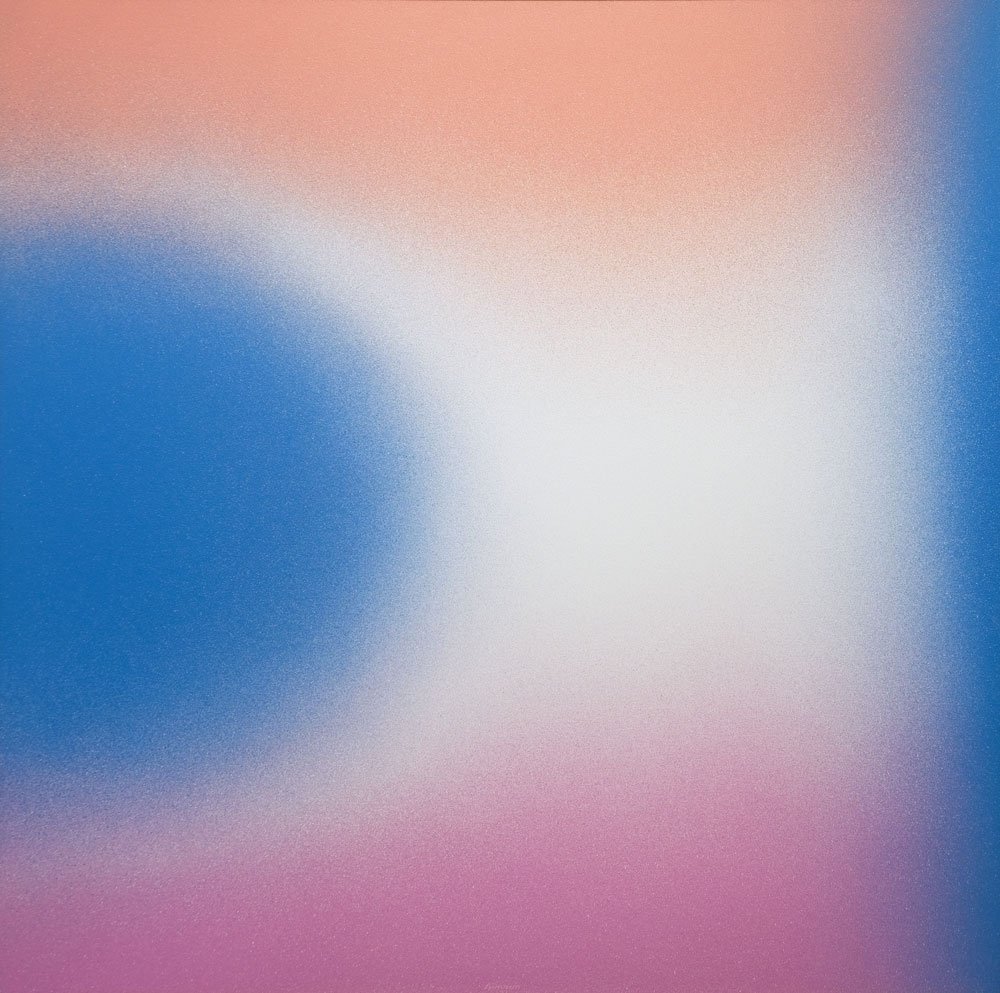
Jonson’s "absolute painting" focused on rhythmic movement and light. He used airbrush to create glowing, vaporous transitions. By layering transparency and softening edges, he creates a suggested a non-objective, atmospheric energy. The shapes are not static objects, but pure vibrations of light freed from the physical world.

Bisttram’s style, however, is architectural and calculated, rooted in the Golden Mean. His technique is grounded in Dynamic Symmetry, using precise mathematical armatures and believing specific geometric proportions unlocked divine harmony and natural order.

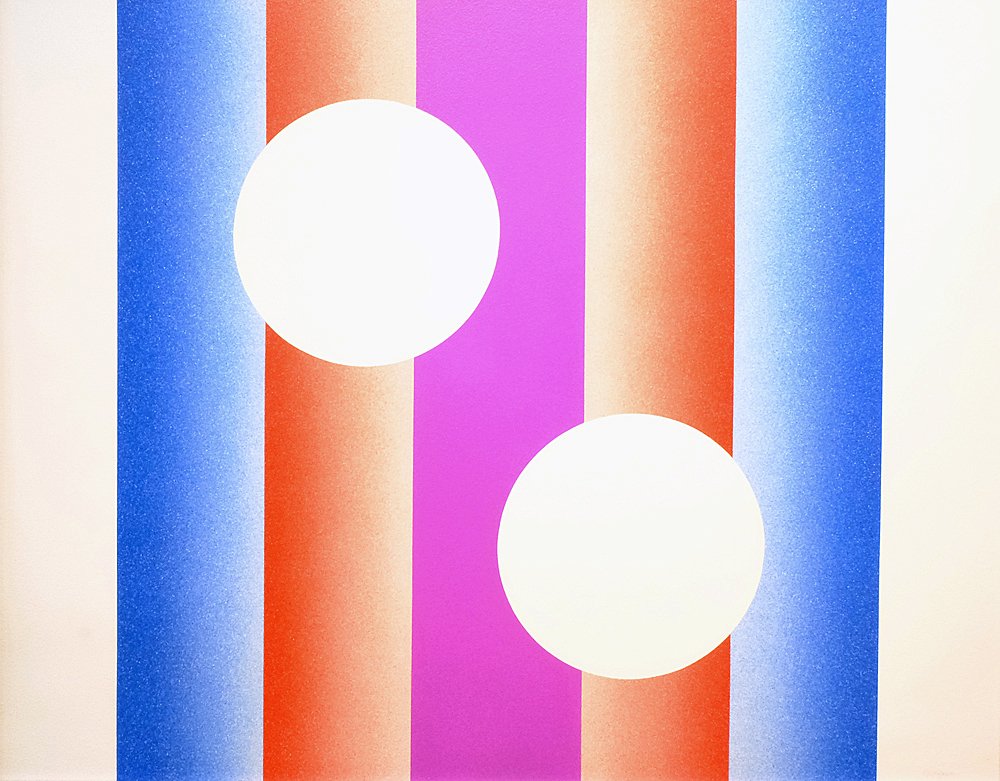
In comparing two of their paintings, Quetzaquetz vs. Polymer No. 28, 1971, we observe the following differences and similarities between the two artists:

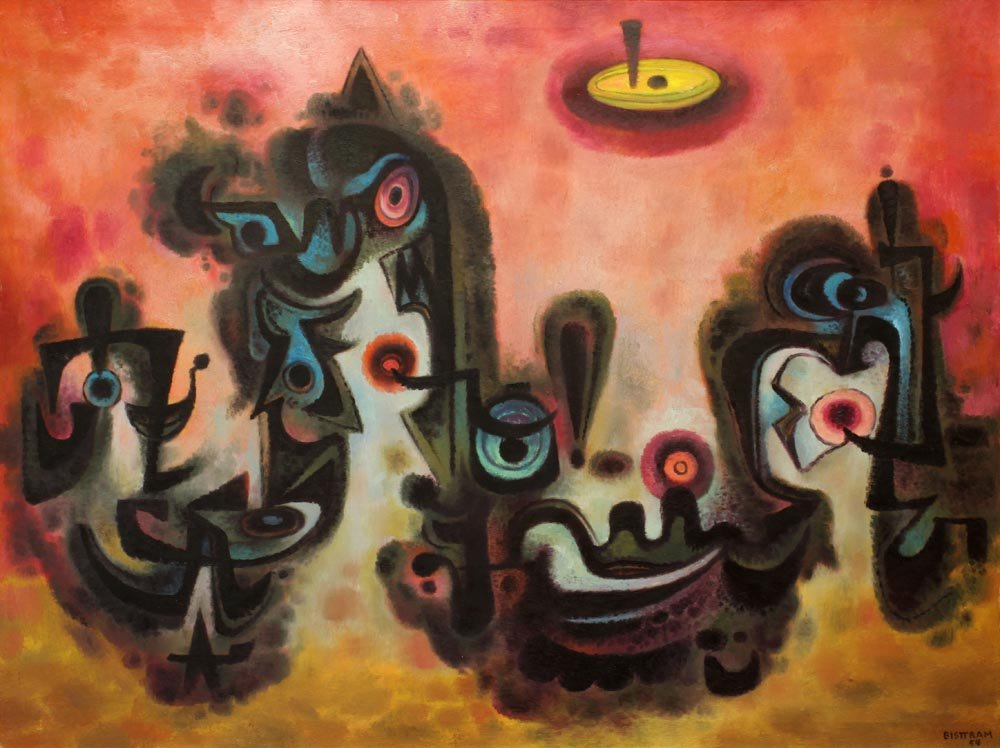
  • Created in 1954, Quetzaquetz is an oil on canvas painting by Emil Bisttram that exemplifies his shift from realism to "transcendental" abstraction. The work is a vibrant blend of biomorphic forms and spiritual symbolism, deeply influenced by the artist's interest in theosophy and the "Dynamic Symmetry" theory of harmonious proportions. 

    The painting features a warm, glowing background of red, orange, and gold tones, creating a luminous space that feels otherworldly. 

    Central to the composition are dark, calligraphic shapes that resemble stylized eyes, figures, or mythical entities. Typical of Bisttram's "non-objective" period, the work includes geometric motifs like circles and orbs, which often represent celestial bodies or "planetary forces". A prominent yellow disc with a central point floats near the top, possibly acting as a "spiritual eye" or sun. And the soft, feathered edges of the forms suggest a sense of movement and "enclosed rhythms," a theme Bisttram explored frequently during the 1950s. 

    The title "Quetzaquetz" likely draws inspiration from Quetzalcoatl, the Mesoamerican deity. This aligns with Bisttram’s fascination with "spiritual universality" and his tendency to blend Native American and Mexican cultural motifs with modern abstraction.

    As a co-founder of the Transcendental Painting Group, Bisttram intended works like this to move beyond the physical world and stimulate "profound levels of thought and intuition". Through Quetzaquetz, he sought to reconcile science and religion into a single, "life-affirming" harmonious vision.

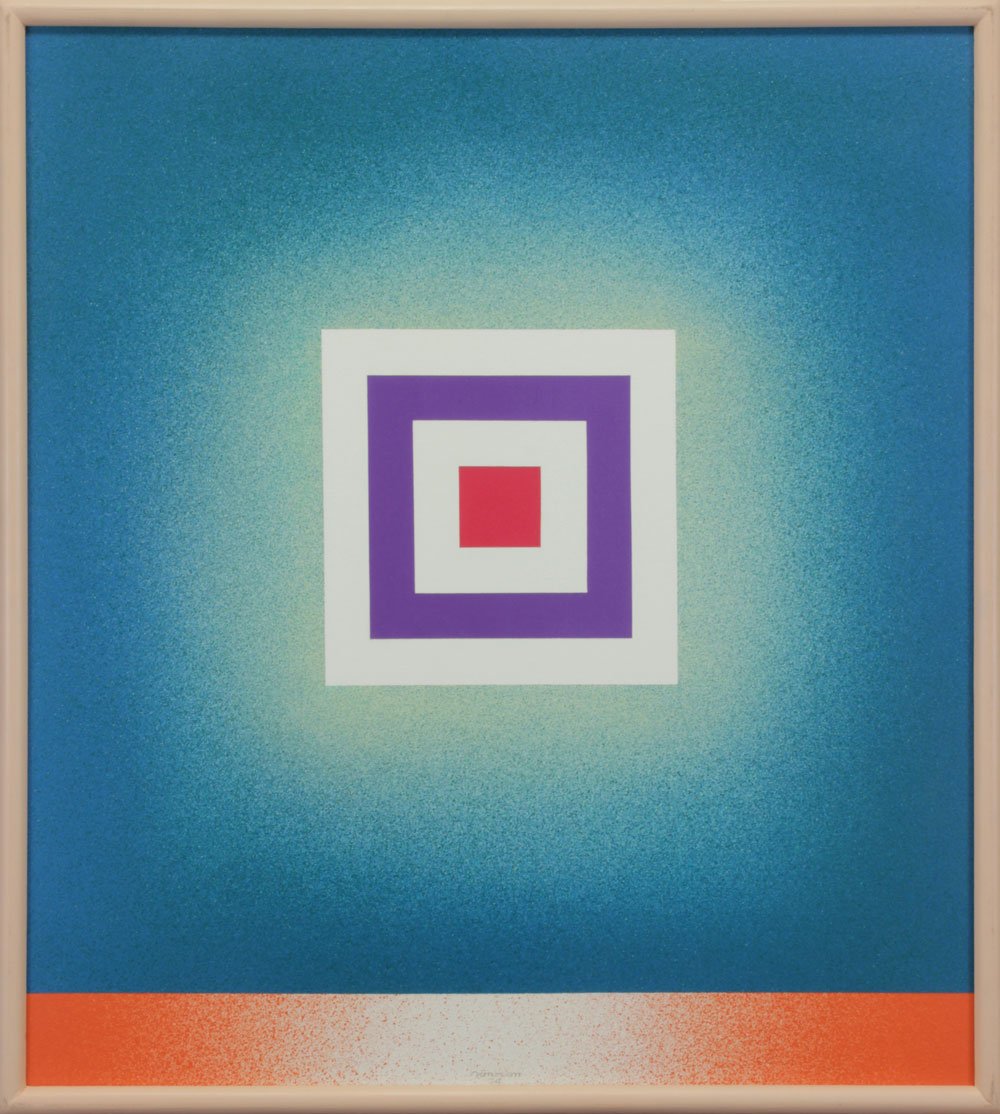
    Polymer No. 28, painted in 1971, is a quintessential example of Raymond Jonson's late-career "absolute painting". While it shares the core spiritual mission of the Transcendental Painting Group (TPG)—using abstraction to manifest a "Godlike spirit" and universal harmony—it reflects a distinct technical evolution away from the more biomorphic, expressive style of his co-founder, Emil Bisttram. 

    ‍Unlike the visible, gestural brushwork often seen in earlier TPG works, this painting utilizes acrylic polymer paints and an airbrush technique that Jonson adopted to eliminate all traces of the artist's hand. 

    ‍ The use of the airbrush creates perfectly smooth, luminous color gradations that would be impossible with traditional brushes. And by 1971, Jonson worked exclusively in this medium, favoring a clean, machine-like finish that he felt better represented the "purity" of spiritual awareness. 

    ‍ While Bisttram’s Quetzaquetz, 1954, uses dark, calligraphic "living" forms, Jonson’s vision is defined by geometric austerity. 

    ‍ The composition features bold, vertical bands of saturated purple, red, and blue, contrasted against stark, hard-edged white orbs. The "vividly saturated geometric forms" often create an optical depth, making the flat canvas feel like a vast, "monumental" cosmic environment.

    ‍Despite the mechanical technique, the painting maintains the TPG's focus on "dynamic order" and "rhythms," which Jonson believed revealed the hidden spiritual structures of reality. 

    Throughout his later years, Jonson’s work moved toward this extreme simplicity. As highlighted by the UNM Art Museum, his shift to acrylics allowed him to focus entirely on the "configuration of colors and shapes" rather than the physical act of painting.

    Together, Jonson and Bisttram defined the TPG’s mission: using abstract geometry not as an end in itself, but as a bridge to a higher state of consciousness. Their partnership proved that math and mysticism could coexist on a single canvas.

    For collectors and researchers, learn more from Addison Rowe Gallery, the exclusive representative of the Raymond Jonson estate, by visiting the website, Addison Rowe Gallery.


FORMER EXHIBITIONS

Sharing an Artistic Narrative

March 2026
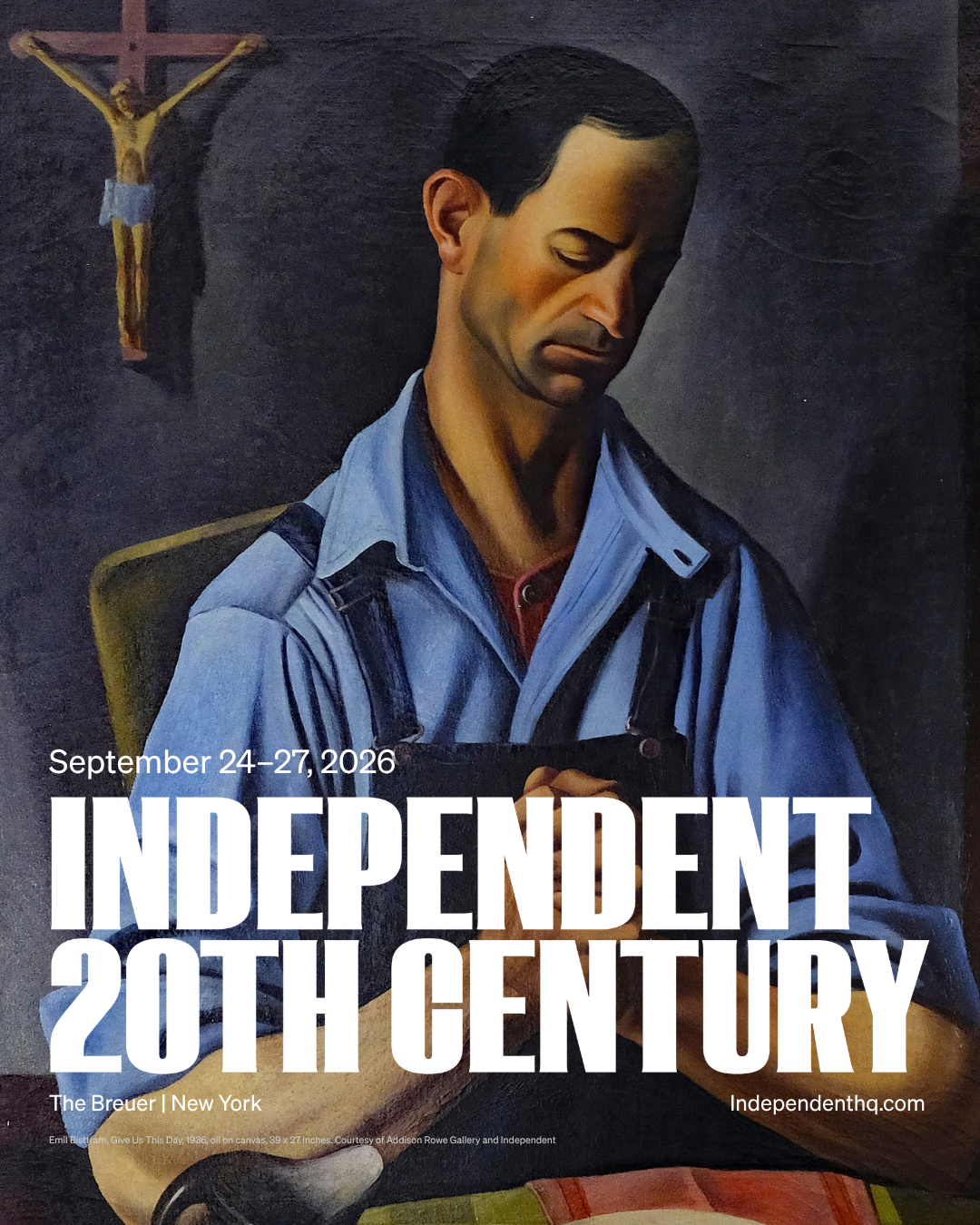
Addison Rowe Gallery at Independent 20th Century

September 04 - 07, 2025
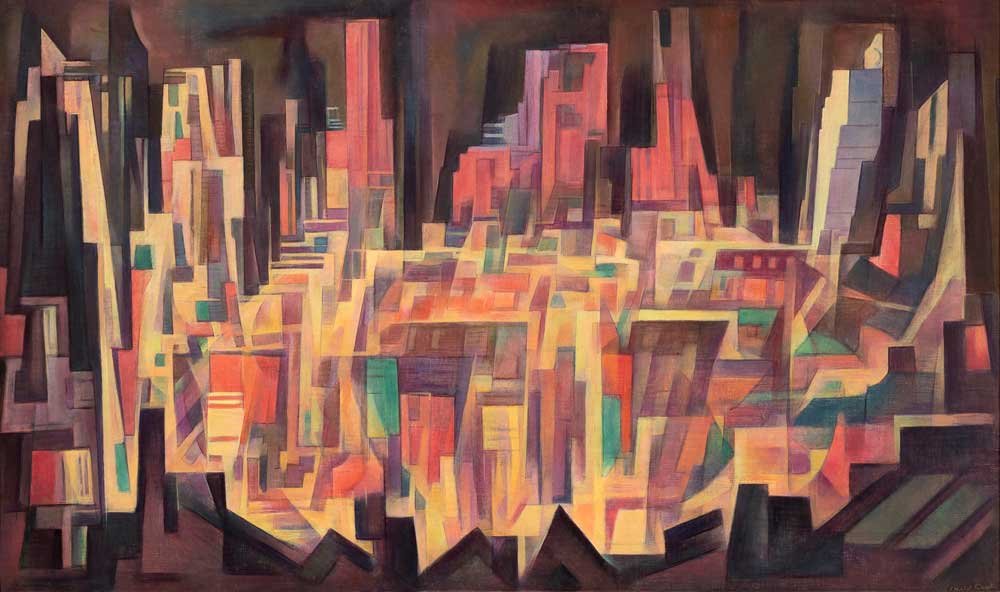
Addison Rowe Gallery at EXPO Chicago

April 2025

Addison Rowe Gallery at Scottsdale Ferrari Art Week

March 2025
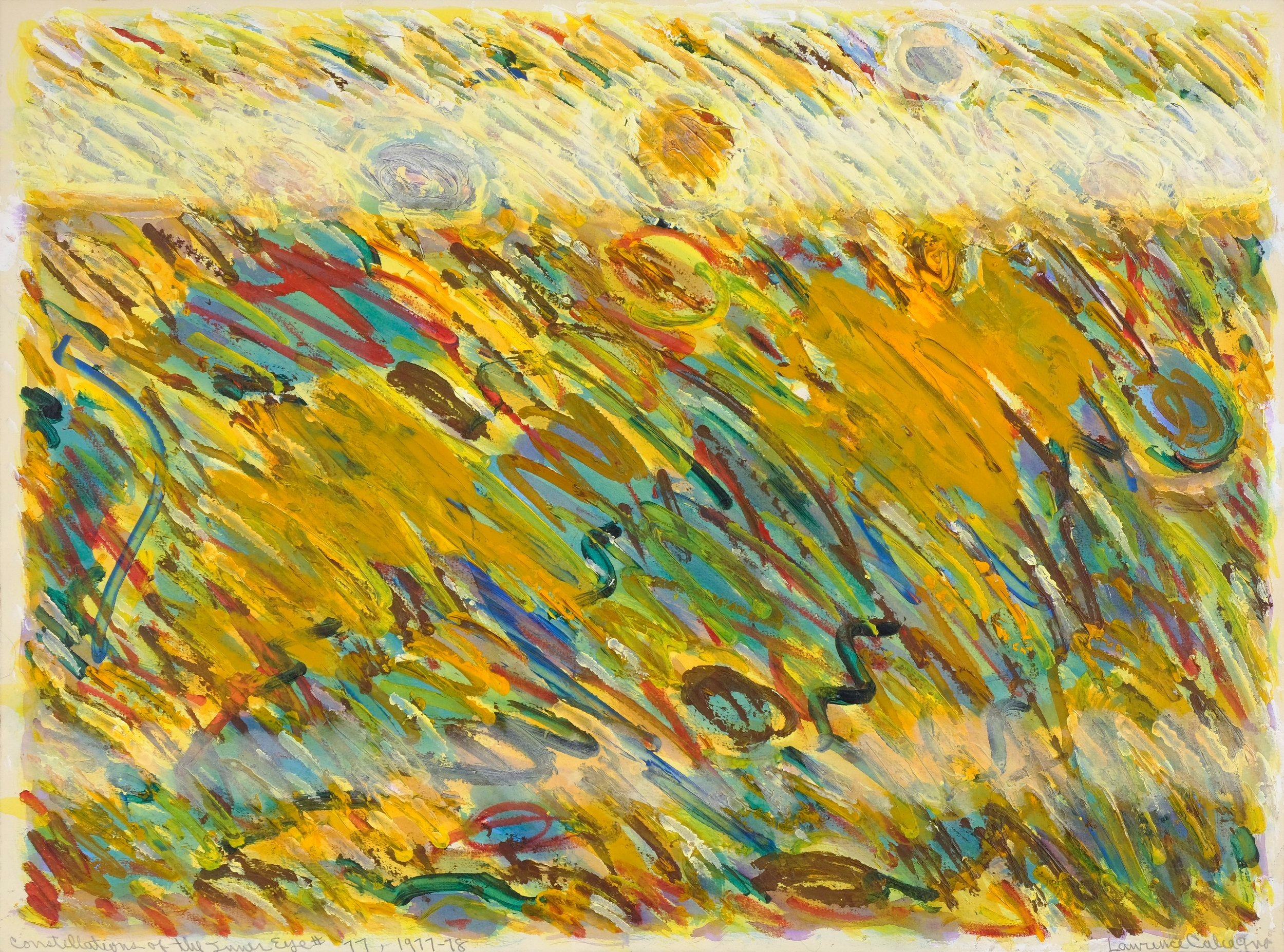
Lawrenece Calcagno - Color and Light

December 2024

Transcendental and Beyond: The Essence of Art

June 2024

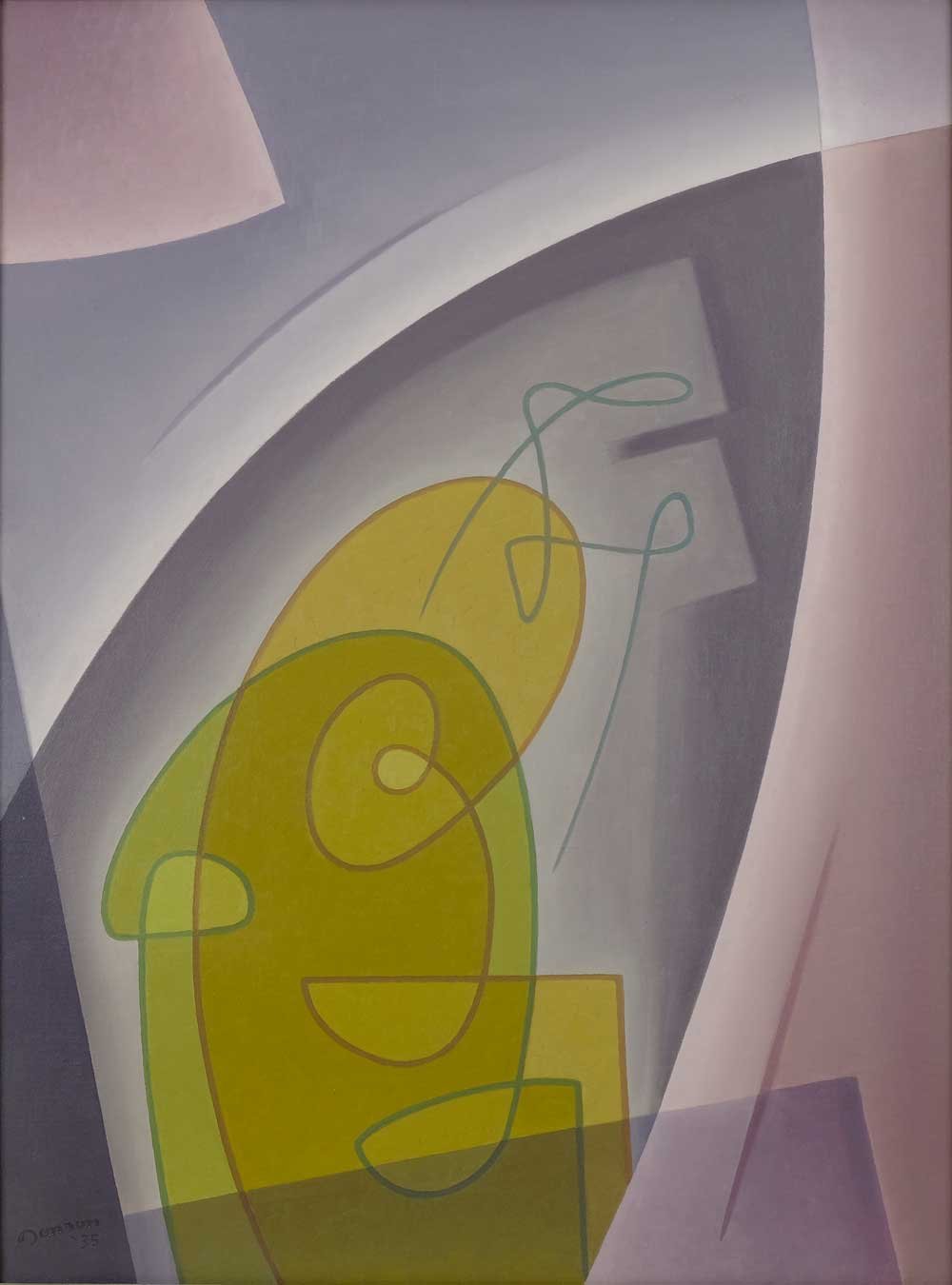
Andrew Dasburg, Symphonic Drawings

January 2024

Werner Drewes And His Influence on Geometric Abstraction

September 2023

The American Art Fair - New York

May 2023

Addison Rowe Gallery Intersect Palm Springs

February 2023

Jonson, Bisttram and Pierce: Pure Color and Form

February 2023

Addison Rowe Gallery at Art on Paper

September 2022
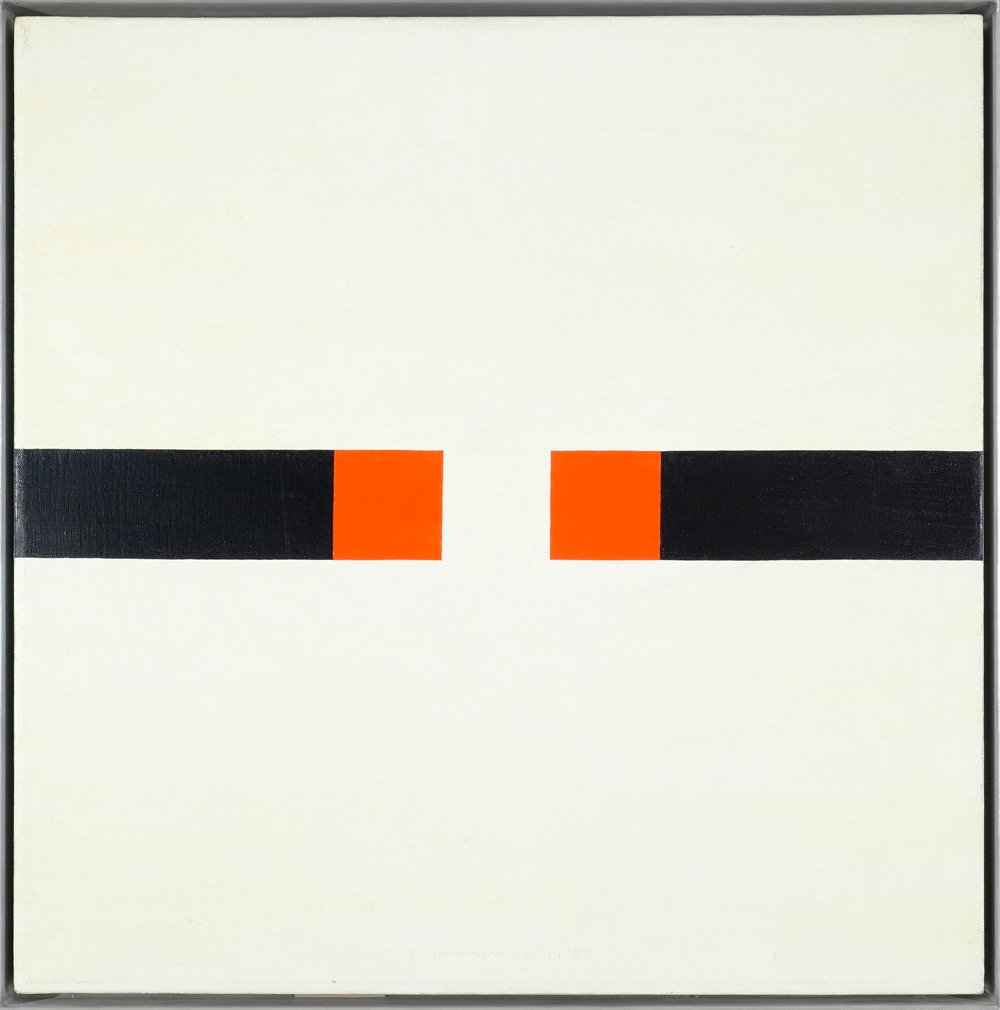
Circles and Squares

March 2022

The Color of Form

September 2021

Agnes Martin and Her Circle

March 2021

Florence Miller Pierce: Mastering the Art of Resin

October 2020
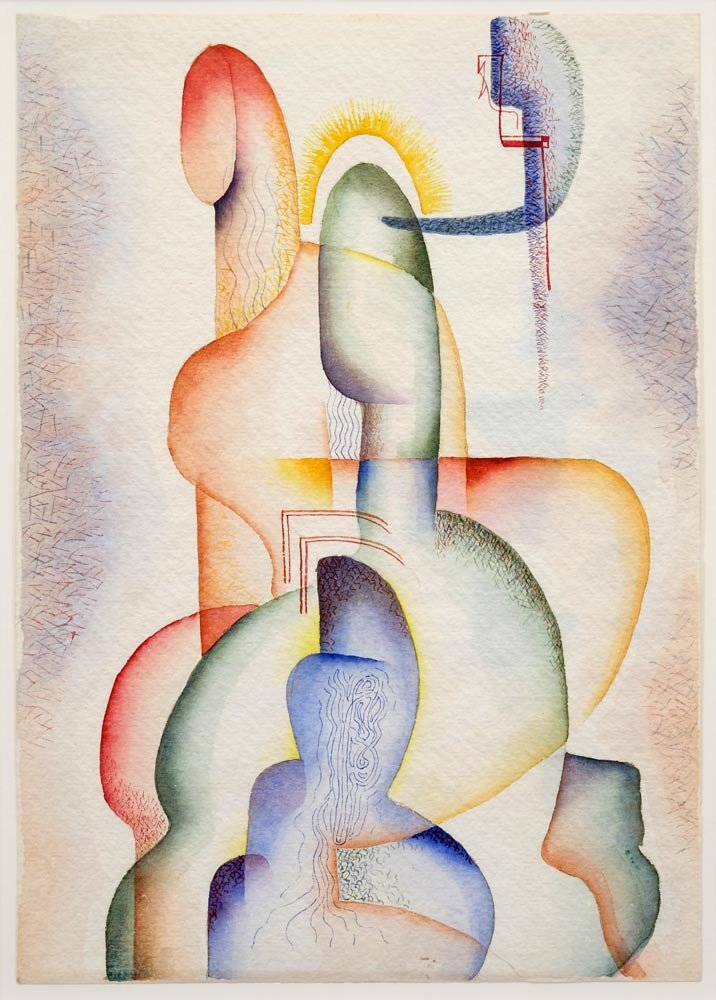
Addison Rowe Gallery at Art on Paper

March 2020

Gallery Highlights

January 2020

Jackson Hole Art Fair

September 2019
Addison Rowe Gallery at Art on Paper N.Y.

March 2019

Summer Highlights

September 2018

Addison Rowe Gallery at Palm Springs Fine Art Fair

February 2018

Gallery Highlights

July 2017

Emil Bisttram Day

May 2017

Addison Rowe Gallery at Art on Paper New York

March 2017

Addison Rowe Gallery at Palm Springs Fine Art Fair

February 2017

From the Transcendental Painting Group to the Taos Moderns: Florence Miller Pierce and Beatrice Mandelman

December 2016

Louis Catusco and Lawrence Calcagno “Not famous, but important”

August 2016

Addison Rowe Gallery at Art Aspen

August 2016
Addison Rowe Gallery at Palm Springs Fine Art Fair

February 2016
Many Faces of Modernism

December 2015
Chromatic Contrasts

August 2015

Emil Bisttram

April 2015

Addison Rowe Gallery at Palm Springs Fine Art Fair

February 2015

Beatrice Mandelman and Louis Ribak

December 2014

Raymond Jonson: Into Abstraction

August 2014