

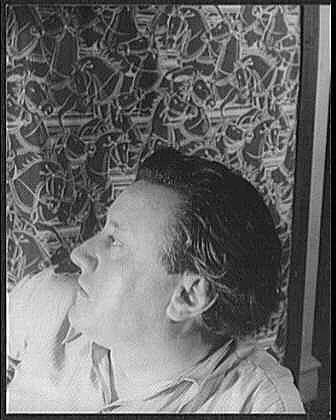
Image Source: WIKIPEDIAGASTON LACHAISE
1882-1935
Gaston Lachaise was born in Paris, France, the fourth child of an accomplished wood carver and cabinetmaker.(1)
At thirteen, he entered the École Bernard Palissy studying drawing, carving and art history. Three years later, he went on to study at the École de Beaux-Arts and his work was exhibited in four annual Paris Salons. Later he worked for the jeweler and glassmaker, René Lalique.
In 1901 following the death of his father, Lachaise was forced to deal with an economic setback but was able to retain his studio.
-
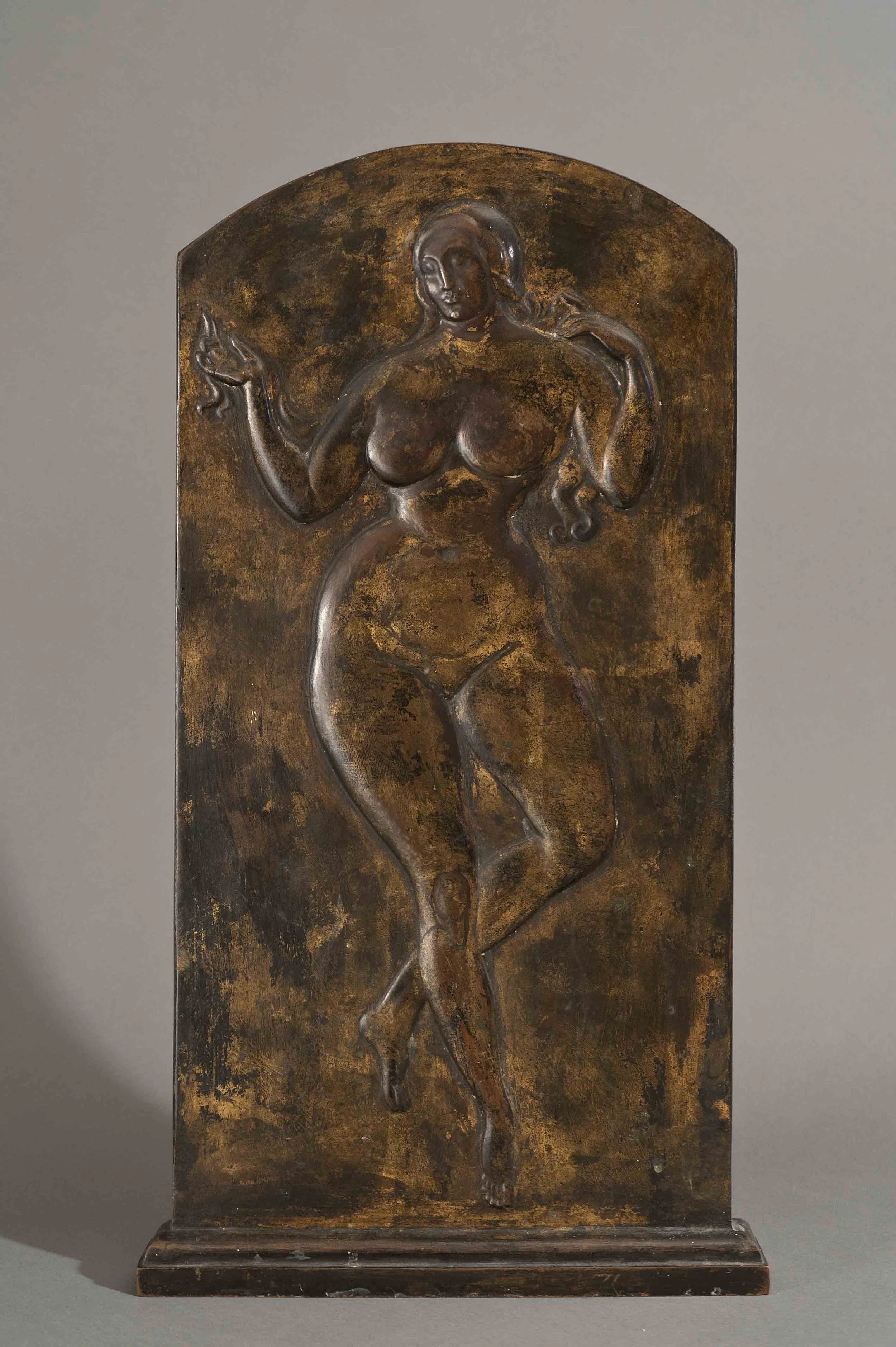
By 1903, Gaston had met Isabel Dutad Nagle, a married woman ten years his senior, and who would become the muse for his art. Lachaise used the funds he had saved from his work with Lalique to follow Nagle back to Boston in 1906.(2) Marsden Hartley once wrote that Lachaise saw "the entire universe in the form of a woman."(3) In 1912, he opened his own studio in New York, and in 1913 entered the Armory Show. He also apprenticed to the sculptor Paul Manship and worked with him on many garden sculptures as well as the J.P. Morgan Memorial at the Metropolitan Museum and on Rockefeller Center.
By 1916, he had become an American citizen, and he finally married Isabel Nagel (now divorced from her first husband) in 1917. A year later, he had his first one-man show at the Stephan Bourgeois Gallery in New York. By 1927, he was producing his most mature work, which was mainly female torsos; but he also did head studies of John Marin, Georgia O'Keeffe and Alfred Stieglitz. Lachaise had always admired Houdon's portraits and he grew to maturity in the time of Rodin in Paris, so this form of sculpture would have been familiar to him. Lachaise made portraits of many of the pacesetters of American intellectual society, including a number of the distinguished group surrounding The Dial magazine.
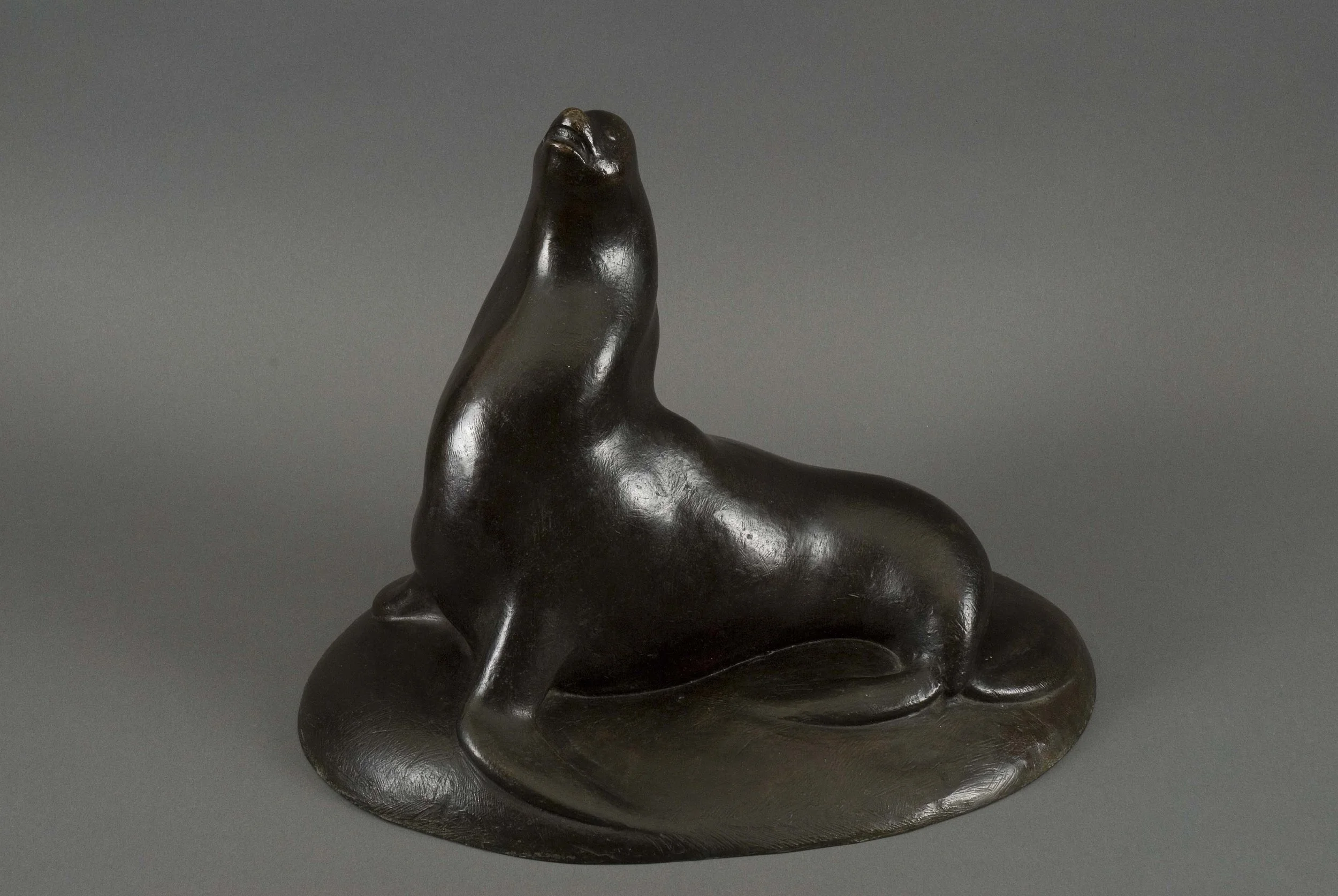
The artist joined Kraushaar Galleries in New York in 1922. In 1925 Lachaise had a solo exhibition at the Art Institute of Chicago. In 1927, he exhibited at Alfred Stieglitz's The Intimate Gallery. In early 1935, Lachaise was honored with a retrospective at the Museum of Modern Art, but many of his pieces were only in plaster, as he could not afford to have them cast in bronze. Many were cast again later for exhibitions at the Whitney, Los Angeles County Museum of Art and the Museum of Modern Art. His pieces are owned by many museums including the Art Institute of Chicago, Detroit Institute of Arts, Metropolitan Museum of Art, Museum of Modern Art, Philadelphia Museum of Art, Hirshhorn Museum and the Columbus Museum.(5)
Lachaise died in 1935 of leukemia at the age of 53. He is acclaimed by many as one who helped prepare the next generation for an appreciation of non-objective sculpture.
Footnotes:
1. We are indebted to Gerald Nordland, Gaston Lachaise: The Man and His Work (New York: George Braziller, 1974) for information on Lachaise's biography.
2. Barbara Rose, Gaston Lachaise Sculpture (New York: Salander-O'Reilly Gallery, 1991), 12. She was the life long inspiration for his sculptures of voluptuous females. 3. Marsden Hartley, "Twice a Year," The Sculpture of Gaston Lachaise, edited by Hilton Kramer (New York: The Eakins Press, 1967), 27. This essay was published originally in 1939.
4. Rose, 87. This included Scofield Thayer, James S. Watson, Jr., Henry McBride, M. R. Werner and the poet e.e. cummings.
5. Carolyn Kinder and Margaret Christman, Gaston Lachaise Portrait Sculpture (Washington, DC: National Portrait Gallery, Smithsonian Institution, 1985), 16. Submitted by the Staff of the Columbus Museum, Georgia.
1919
Cast after 1935
Bronze
17 x 12 x 5 ¾ inches
Inscribed: © G. LACHAISE 1928
INQUIRE