

Image Source: NORMAN ROCKWELL MUSEUM
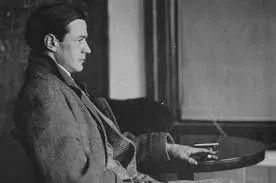
EVERETT SHINN
1876-1953
Everett Shinn possessed a style defined by its theatricality, kinetic energy, and a distinctive "snapshot" quality. While his Ashcan School contemporaries often focused on the grim realities of the street, Shinn was a master of the artificial.
He favored pastels for their speed and vibrancy, using them to capture the fleeting drama of stage lighting, the motion of vaudeville dancers, and the shifting moods of New York City. His technique, honed by years as a newspaper illustrator, prioritized immediate visual impact and emotional resonance over rigid anatomical precision, often using low-angle perspectives that placed the viewer directly in the front row of a performance.
EVERETT SHINN BIOGRAPHY
-
Born in Woodstown, New Jersey, Shinn studied at the Pennsylvania Academy of the Fine Arts, where he joined the circle of Robert Henri. This group, later known as "The Eight," challenged the conservative National Academy of Design by insisting that modern life—no matter how mundane or gritty—was the only worthy subject for art. Shinn’s contribution to this movement was unique; he blended the grit of the Ashcan philosophy with a love for Rococo elegance and urban spectacle.
His career was remarkably diverse. Shinn was a successful muralist, a playwright, and an art director for major motion pictures in 1920s Hollywood. Despite the decline of the Ashcan School’s popularity, his work remains a vital record of early 20th-century entertainment. His masterpieces are currently preserved in major collections, including the Metropolitan Museum of Art and the National Gallery of Art.
1900
Pastel and pencil on paper
22 ¼ x 30 inches
Signed lower left
INQUIRE