
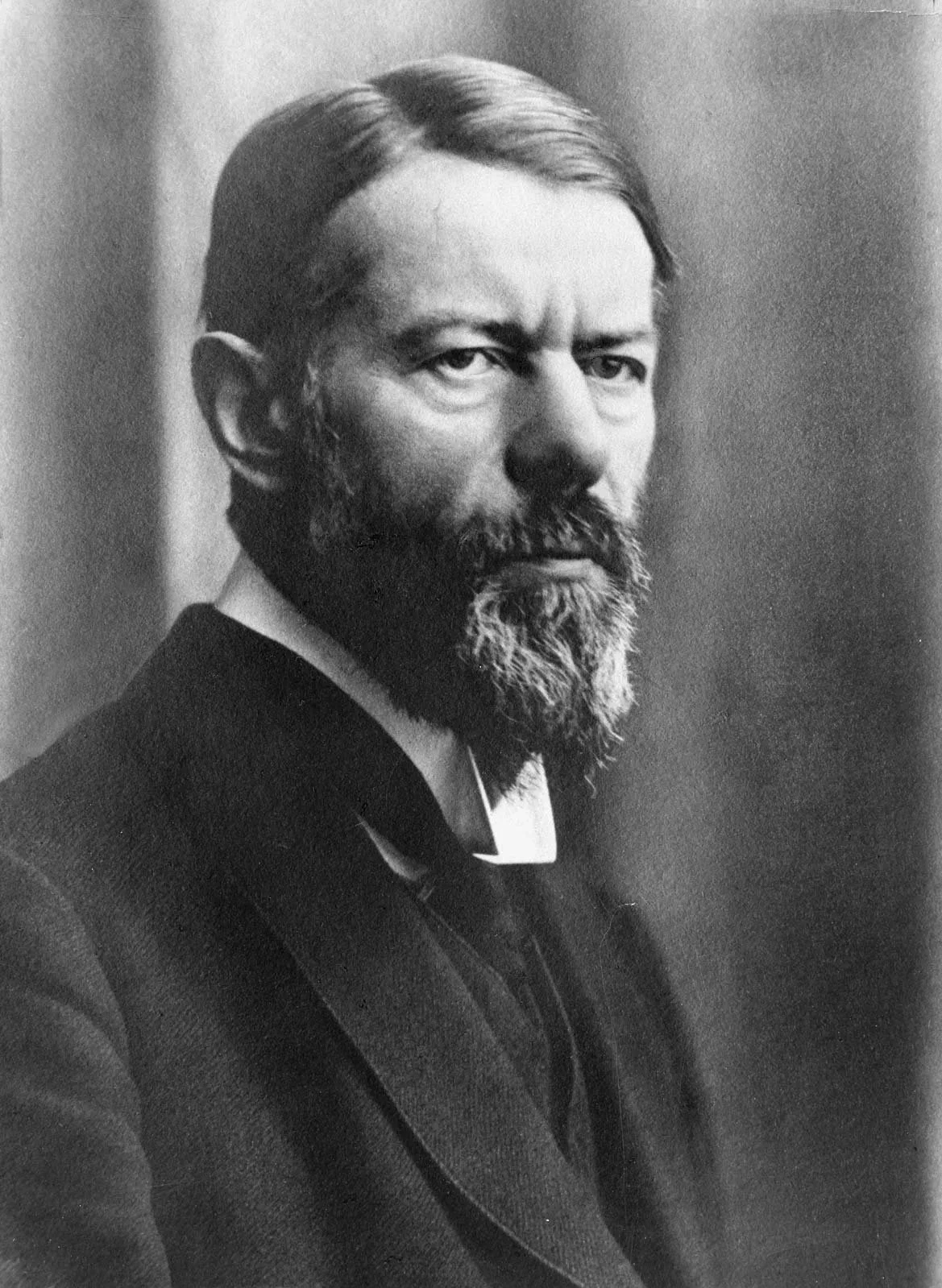
Image Source: WIKIPEDIAMAX WEBER
1881-1961
Max Weber's artistic vision first developed at the Pratt Institute under Arthur Dow, who introduced his students to nonwestern aesthetic traditions.
After leaving school, Weber began teaching, hoping to raise enough funds to travel abroad. In 1905 he was in Paris, one of the first American artists to be directly influenced by European modernism.
MAX WEBER BIOGRAPHY
-
Weber studied at the Académie Julian (where he met Abraham Walkowitz), Académie Colarossi, Académie de la Grande Chaumiere, and with Henri Matisse and Jean-Paul Laurens. In his travels through Europe, he not only learned more about western art traditions but also absorbed African and Asian art. (1)
His Parisian circle of friends included Pablo Picasso, Robert Delauney, André Donoyer de Segonzac, and Henri Rousseau. Weber could not have arrived in Paris at a more opportune time. Matisse was exploring the brilliant colors of Persia; Picasso was experimenting with the planar surfaces of African masks and beginning to develop the theories of what became known as Cubism. Weber understood and appreciated these new ideas but was most influenced by Paul Cézanne's unique depiction of space in paintings he saw at the Salon d'Automne in 1906 and 1907. (2)
Although Weber produced a series of cubist-inspired abstract paintings from 1915 to 1918, after 1919 all of his work was representational; is subjects were still life, landscape, and genre scenes of recent immigrants and the working class.
From the 1940s on, Weber developed a more emotional, expressionist approach in his work. When he returned to the United States in 1909, his new style of painting brought hostile reactions. The next year he met Alfred Stieglitz, art dealer and photographer, who understood Weber's modernist vocabulary. Stieglitz provided Weber with moral and financial support and exhibited his work with a handful of contemporary American modernists. (3) Weber assisted Stieglitz by organizing exhibitions.
However, the artist's association with Stieglitz would be short-lived, for he continued to develop independent theories of modern art and soon fell out of favor with Stieglitz and his circle. Weber was invited to participate in the Armory Show in 1913, but he withdrew after learning that only two of his pictures had been accepted, whereas eight or ten images by his French counterparts would be exhibited. (4) But the slight was soon forgotten. That same year Weber had a successful solo show at the Newark Museum of Art, the first ever devoted to an American modernist artist.
He experimented with sculpture, both figurative and abstract, and wrote poetry and treatises on modernist theories. He exhibited at the Whitney Museum of American Art, the Museum of Modern Art, and the Art Institute of Chicago, among others.
Sources:
1. Anne N. Bolin, The American Collection: Selected Works from the Norton Museum of Art Collection (West Palm Beach, Fl: Norton Museum of Art, 1995): 119.
2. Abraham A.Davidson, Early American Modernist Paintings, 1910-1935 (New York: De Capo Press, 1994): 29.
3. Stieglitz's Little Galleries of the Photo-Secession, or 291, as it was more commonly known, was an important factor in the rise of modern art in America. Few individuals have exerted as strong an influence on twentieth-century American art and culture as photographer and art dealer Alfred Stieglitz. He brought modern European art to the United States, organizing the first exhibitions in this country of works by Pablo Picasso, Henri Matisse, Georges Braque, and Paul Cézanne, among others. He was one of the first to champion and support American modernist artists such as Georgia O'Keeffe, Arthur Dove, John Marin, Marsden Hartley, Charles Demuth, and photographer Paul Strand.
4. Milton W.Brown, The Story of the Armory Show (New York: Joseph Hirshhorn Foundation, 1963): 121.
Submitted by the Staff, Columbus Museum of Art, Georgia
1911
Oil on academy board
18 × 11 ¾ inches
Signed lower right
INQUIRE